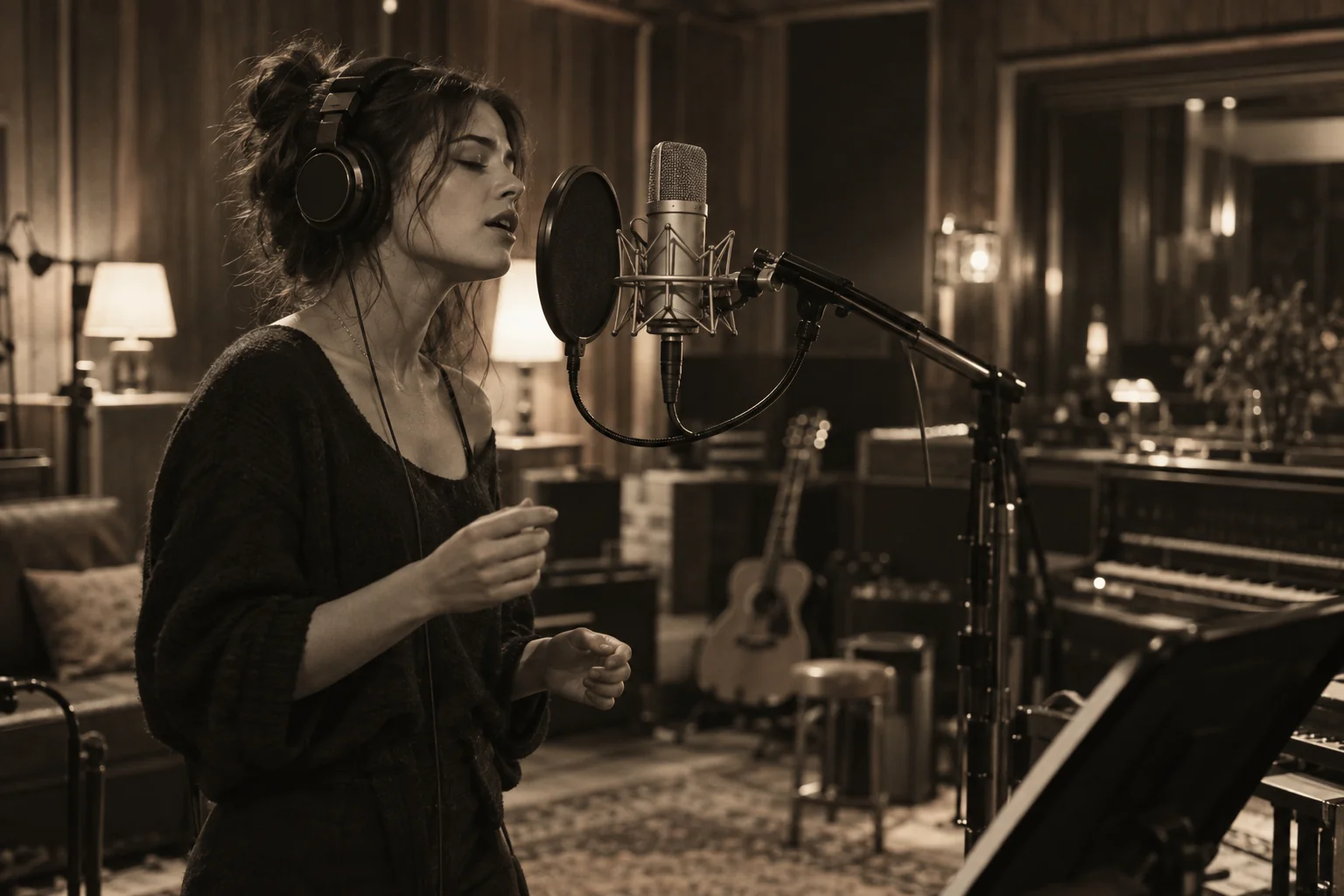
Bass is one of the six main classical voice types. Compare it with all six vocal ranges, or see them on the vocal range chart.
Bass vocal range: about E2–E4
E2–E4 is the New Grove reference range, and the Harvard Dictionary of Music gives a nearby E2–C4. The low extreme for basses generally sits around C2 (65.4 Hz, two Cs below middle C); basso profondos and the Russian oktavist tradition go well below that.
Low notes in a role are different from a singer’s absolute low limit. Osmin in Mozart’s The Abduction from the Seraglio is a familiar example of unusually low operatic writing. Russian choral repertoire also features specialist low basses. Avoid declaring any one note the lowest in all opera: repertoire and editions vary.
Basses also need upper-middle notes, legato and agility. Low voice does not mean a voice without a top: the score determines how high a role goes, and the singer’s usable extension varies. Choose a piece by its tessitura as well as its extremes.
In choral music the bass is simply the lowest part, and SATB writing splits it into first and second bass without distinguishing bass from baritone voices at all — unlike the three-way tenor/baritone/bass split used for solo voices. It's only in male-choir (TTBB) and barbershop (TLBB) arrangements that the lowest two parts get labelled baritone and bass separately.
What a bass sounds like
A bass is commonly described as dark and resonant, with a low-middle region that stays clear and audible. Tone depends on training, vowel and volume as well as voice category; pitch alone does not explain the sound.
Classical casting uses several bass sub-categories, and they divide by weight and by what the voice is asked to do:
| Sub-type | Character | Typical roles |
|---|---|---|
| Basso cantante (lyric high bass) | Higher, more lyrical, Italianate production with a faster vibrato; shares qualities with the baritone | Don Giovanni, Figaro (The Marriage of Figaro), Méphistophélès (Faust), Philip II (Don Carlos) |
| Hoher Bass (high bass / dramatic bass-baritone) | Powerful, high-lying dramatic bass | Boris (Boris Godunov), Wotan (The Ring), Banquo (Macbeth), Zaccaria (Nabucco) |
| Jugendlicher Bass | A young man's role sung by a bass, whatever the singer's age | Masetto (Don Giovanni), Colline (La bohème) |
| Basso buffo | Comic bass writing requiring agility and clear patter | Don Pasquale, Dulcamara, Dr Bartolo, Leporello |
| Schwerer Spielbass (dramatic buffo) | Heavier dramatic-comic bass | Khan Konchak (Prince Igor), Daland (The Flying Dutchman), Varlaam |
| Lyric basso profondo | The lowest bass; tone built without the Italian quick vibrato — what J. B. Steane called "a wall-like front" | Sarastro (The Magic Flute), Osmin, Rocco (Fidelio), Pimen, Baron Ochs |
| Dramatic basso profondo | A powerful low bass; the heaviest bass writing there is | The Commendatore, Hagen, Hunding, Fafner, King Marke, the Grand Inquisitor, Claggart |
The German Fach system uses additional casting labels. These describe a role’s demands as well as a singer’s sound, and assignments can vary between productions. A bass-baritone category bridges the lower male voices without making them identical.
Bass vs baritone vs basso profondo
Bass vs baritone. E2–E4 against A2–A4, with a wide overlap and the bass-baritone sitting right on the line. The practical comparison includes where a repeated phrase feels comfortable and how clearly the low notes carry. Reaching E2 once does not decide the category. Basso cantante and bass-baritone labels can overlap in casting, but are not universal synonyms.
Basso profondo is a bass subtype. It describes a particularly deep bass instrument, not a prescribed vibrato pattern. The related Russian choral term oktavist describes a specialist who may sing an octave beneath the usual bass line. These are useful repertoire labels, not targets everyone should try to reach.
Bass is pronounced like “base” when it means the voice. The same word appears in instrument names, the bass clef and audio terminology. Here it refers to a singer; the fish has a different pronunciation.
How to tell if you are a bass
These are observations to discuss with a teacher, not a score or a diagnosis. Warm up, use a comfortable volume, and stop any note that needs squeezing or shouting.
- Your low-middle phrases keep a clear, audible tone instead of fading into breath or vocal fry.
- When available, notes around E2–G2 can be held steadily at a comfortable volume.
- Compare the same melody in different keys and look for a lower comfortable centre.
- Do not call yourself a bass solely because one unusually low note appears during warm-up.
- Compare bass-baritone and baritone; a choral bass assignment can include all three.
- Record your range and comfortable phrases separately. A teacher can assess their colour and register transitions.
Use the vocal range test to record the notes you can hold for about two seconds. Then write down where a short phrase feels easiest. An endpoint result is a starting point; range, tessitura, colour and vocal weight need to be heard together.
Famous basses
Classical
| Singer | What to listen for | Documented range | Source |
|---|---|---|---|
| René Pape | His official biography documents Sarastro, King Marke and Gurnemanz, useful examples of lyrical and dramatic bass writing. | — | Official biography and repertoire |
| Bryn Terfel | A neighbouring category: the Met calls him a bass-baritone. Compare his upper-middle phrases with Pape's bass repertoire. | — | Metropolitan Opera profile |
Country, soul and vocal groups
Paul Robeson's "Ol' Man River", Barry White's recordings and the low part of a vocal-group arrangement are useful listening comparisons. They do not all use the same classical technique, and a low speaking sound is not a measured bass range.
Note-by-note ranges quoted online for famous singers are almost always fan estimates. Bass and bass-baritone descriptions can overlap, especially outside opera; no exact personal range is claimed here.
Bass songs and repertoire
Classical
| Piece | Why it sits in the bass repertoire | Verified edition range |
|---|---|---|
| "O Isis und Osiris" — Mozart, The Magic Flute | Sarastro; the lyric basso profondo at its most exposed — slow, sustained, entirely reliant on resonance rather than volume. | — |
| "In diesen heil'gen Hallen" — Mozart, The Magic Flute | The same voice again, and the aria that shows why the low bass is a colour and not a stunt: the notes are not extreme, the depth is. | — |
| "Wer ein Liebchen hat gefunden" and "Ha, wie will ich triumphieren" — Mozart, The Abduction from the Seraglio | Osmin; a role known for unusually low writing, and a comic bass part built around it. | — |
| "La calunnia è un venticello" — Rossini, The Barber of Seville | Don Basilio; basso buffo writing that builds a crescendo out of a patter line and needs the low notes to carry the joke. | — |
| "Madamina, il catalogo è questo" — Mozart, Don Giovanni | Leporello; the catalogue aria, and the clearest example of what agile basso buffo technique is for. | — |
| The Commendatore scene — Mozart, Don Giovanni | A sustained, imposing bass part. The Champagne aria belongs to Don Giovanni, not the Commendatore. | — |
| "Vous qui faites l'endormie" — Gounod, Faust | Méphistophélès; basso cantante with a sardonic edge, sitting high enough in the bass range to need the lyrical production. | — |
| "Ella giammai m'amò" — Verdi, Don Carlos | Philip II; the bass as a psychological part rather than a comic or supernatural one, with a long solo scene and a high G in the writing. | — |
| "Il lacerato spirito" — Verdi, Simon Boccanegra | Fiesco; Verdi's other great bass father, and a part where the hoher Bass weight is the point. | — |
| "Als Büblein klein" and the watchman's song — Wagner, Die Meistersinger | Hans Sachs is written for a bass-baritone, which is why the role sits on the bass/baritone line that this page keeps running into. | — |
| "O wie ängstlich" — Wagner, Der fliegende Holländer | Daland; a Schwerer Spielbass part, and a reminder that Wagner's basses are cast by weight, not by how low they go. | — |
| "Hier sitz' ich zur Wacht" — Wagner, Götterdämmerung | Hagen; dramatic basso profondo writing as an actual dramatic weapon — a substantial dramatic low-bass role. | — |
| All-Night Vigil — Rachmaninov | The choral case: written low enough that the basses reach B♭1, and the work that made the Russian oktavist tradition famous outside Russia. | — |
| Symphony No. 2 — Mahler | A symphonic part that asks the basses to go where opera rarely does (B♭1), with the low line exposed rather than buried. | — |
Exact note spans depend on the score, edition, transposition and any performance additions. A dash means no specific edition has been verified here. Use these as listening references, then check your own score before choosing a practice piece.
Some of this repertoire is shared with neighbouring voices. Alto writing in particular may be sung by a contralto, mezzo-soprano or countertenor. Compare the actual part and tessitura before choosing a piece.
Pop, rock and jazz
Songs that sit in the lowest male register rather than pieces written to a voice type:
- "Ol' Man River" — Paul Robeson
- "You're the First, the Last, My Everything" — Barry White
- "Michelle" / "Running with the Devil" — the low-fronted rock vocal tradition of Type O Negative and Rammstein
- "Your Man" — Josh Turner
- "Sixteen Tons" — Tennessee Ernie Ford
- "American Woman" and the vocal-group bottom line — the doo-wop and soul bass tradition
- "Dernière danse" — the deep male lead in French popular music
- "Low" — the low-register pop and hip-hop end of the current catalogue
Transposition is routine across all of this, so the key on the record says less about the voice than the register the singer settles into.
Frequently asked questions
A few things to know before you sing.
What is the bass vocal range?
About E2–E4 in the reference convention used here. Individual basses may sing below or above it, and repertoire uses different spans.
What is the difference between bass and baritone?
A bass generally has a lower comfortable tessitura and fuller low-register tone. Reaching E2 once does not establish that distinction.
Can a bass sing high?
Yes. Bass repertoire includes upper-middle singing as well as low notes. The highest usable note varies with the singer and technique.
What is a basso profondo?
A particularly deep bass category associated with a resonant low range. It is a bass subtype, rather than a seventh standard voice type.
What is an oktavist?
A specialist low choral singer associated with Russian repertoire, sometimes singing an octave beneath the ordinary bass line.
Can a bass sing pop songs?
Yes. Change the key when needed and check where the whole song lies, rather than choosing solely by the original singer’s label.
Related
- All six vocal ranges explained
- Vocal range chart
- Baritone vocal range
- Tenor vocal range
- Take the vocal range test — measure your usable low and high notes.
Sources & range conventions
The ranges on this site are approximate classical reference spans, not limits or audition requirements. Published ranges vary with repertoire and classification system. No individual singer’s exact range is inferred from a voice-type label.