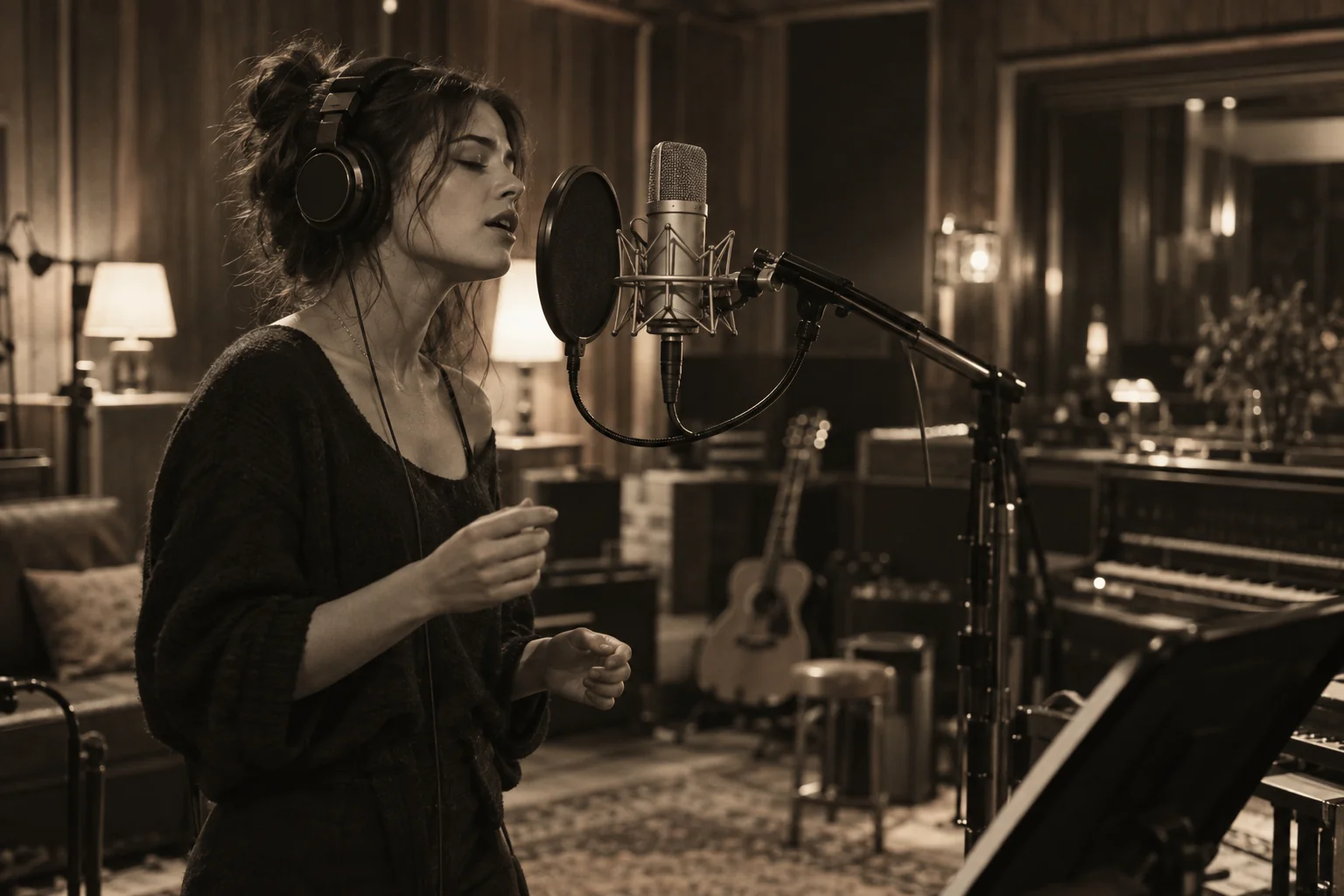
Mezzo-Soprano is one of the six main classical voice types. Compare it with all six vocal ranges, or see them on the vocal range chart.
Mezzo-soprano vocal range: about A3–A5
A3–A5 is the reference span used on this site, rather than a limit on every mezzo voice. Coloratura, lyric and dramatic labels describe agility, weight and repertoire; they do not give three fixed pitch boxes.
| Sub-type | Character | Typical roles |
|---|---|---|
| Coloratura mezzo | Warm low register, agile high register; most comfortable in the middle, not the top | Rosina (The Barber of Seville), Angelina (La Cenerentola), Isabella (L'italiana in Algeri), Romeo (I Capuleti e i Montecchi), Ariodante, Serse |
| Lyric mezzo | Smooth and sustained; not as agile as coloratura, not as big as dramatic | Carmen, Dido (Dido and Aeneas), Octavian (Der Rosenkavalier), Cherubino (Le nozze di Figaro), Charlotte (Werther), Mignon |
| Dramatic mezzo | Strong middle, warm high, broader and more powerful; carries over an orchestra and chorus | Azucena (Il trovatore), Amneris (Aida), Dalila (Samson et Dalila), Eboli (Don Carlos), Brangäne (Tristan und Isolde), Fricka, Klytämnestra |
The line between mezzo and contralto is the practical one. True operatic contraltos are very rare, so singers with very low tessituras are routinely included among mezzo-sopranos — the two ranges can cover each other. That's the same story as bass/baritone and tenor/baritenor: the boundary is a casting convention, not a physical wall.
And the mezzo's "high C" is the standard one. C6 is the note sopranos are famous for and mezzos only occasionally reach, which makes it a bad test for anything except range extremes.
What a mezzo sounds like
Fuller and darker than a soprano, with the strength sitting in the middle of the voice rather than at the top. Mezzos are generally described as having a heavier tone than sopranos, and the voice resonates higher than a contralto's — so the three female types stack as weight and depth, not just as pitch bands.
Mezzo repertoire covers leading women such as Carmen, dramatic roles such as Amneris, and trouser roles: male characters often performed by women, such as Cherubino and Octavian. This variety gives the voice dramatic as well as musical range. It is not confined to supporting parts.
Mezzo vs soprano vs contralto
Mezzo vs soprano. A3–A5 against C4–C6, with a wide overlap. A mezzo generally has a lower comfortable centre and a fuller middle colour, while a soprano generally works comfortably higher. These are comparisons of the whole instrument, not a rule that either voice must lose tone at a particular note.
Mezzo vs contralto. The contralto’s comfortable centre is typically lower, with a darker low-middle tone. A mezzo may have some of the same low notes while finding longer phrases easier higher up. Reaching F3 alone does not establish a contralto voice; compare the comfortable tessitura and tone across the phrase.
Casting and classification are different. Some roles are performed by both sopranos and mezzos in different productions. That flexibility does not make the voice types interchangeable. Countertenors can also sing some of this repertoire using a developed upper register; compare the individual singer and score.
How to tell if you are a mezzo-soprano
These are observations to discuss with a teacher, not a score or a diagnosis. Warm up, use a comfortable volume, and stop any note that needs squeezing or shouting.
- Your middle register is repeatable and even, while extended high phrases may take more work.
- Some high soprano notes may be available, but check whether the surrounding phrase is comfortable too.
- Low notes may have body without being as central to your sound as they are for a contralto.
- Try a familiar phrase in nearby keys and note where you can sustain it most easily.
- Singing alto in a choir is compatible with mezzo-soprano, but does not prove the classification.
- Compare both neighbouring types and ask a teacher about tone, weight and register changes.
Use the vocal range test to record the notes you can hold for about two seconds. Then write down where a short phrase feels easiest. An endpoint result is a starting point; range, tessitura, colour and vocal weight need to be heard together.
Famous mezzo-sopranos
Classical
| Singer | What to listen for | Documented range | Source |
|---|---|---|---|
| Joyce DiDonato | Compare her agile phrases with her sustained middle register; her official biography identifies her as a mezzo-soprano. | — | Official biography |
| Clémentine Margaine | The Met identifies her as a mezzo-soprano in its casting of Giulietta in Les Contes d'Hoffmann. | — | Metropolitan Opera production |
Pop and musical theatre
Adele, Ella Fitzgerald and Barbra Streisand offer contrasting examples of sustained middle-register singing. These are listening suggestions rather than verified classical voice classifications. Belting, microphone technique and transposition can make comparisons across styles misleading.
Note-by-note ranges quoted online for famous singers are almost always fan estimates. A mezzo label describes a vocal category; it is not evidence that every performer owns precisely the same low and high notes.
Mezzo-soprano songs and repertoire
Classical roles
Mezzo repertoire ranges from quick passagework to long dramatic phrases. A role’s category tells you about the character of the writing, but it does not guarantee that every aria will be comfortable for every mezzo. Start with a teacher and the score you actually plan to sing.
| Piece | Why it belongs here | Verified edition range |
|---|---|---|
| “Voi che sapete” — Mozart, The Marriage of Figaro | Cherubino’s song: a familiar trouser-role example, with an exposed line that rewards even tone and clear phrasing. | — |
| “Non più mesta” — Rossini, La Cenerentola | Angelina’s closing rondò illustrates coloratura mezzo writing, combining a grounded middle with agile runs. | — |
| “L’amour est un oiseau rebelle” — Bizet, Carmen | The Habanera places character and rhythmic control at the centre of the phrase. A lower tessitura alone does not make it an easy beginner piece. | — |
| “Mon cœur s’ouvre à ta voix” — Saint-Saëns, Samson et Dalila | Dalila’s aria is a comparison for sustained, warm middle-register singing and long-breathed legato. | — |
| “Va! laisse couler mes larmes” — Massenet, Werther | Charlotte’s scene shows how a sustained line and changing dynamics can be demanding even without extreme high notes. | — |
A dash means no specific edition’s note span is reported here. Check the exact score, key and any cuts or additions before comparing a piece with your measured endpoints. The same role may appear in a neighbouring voice’s repertoire; casting and transposition explain some of that overlap.
Pop and musical theatre
Try listening to “Someone Like You” by Adele, “Summertime” as sung by Ella Fitzgerald, or “The Way We Were” by Barbra Streisand for contrasting approaches to sustained phrases. They are listening examples, not voice-type tests or a promise that the original key suits every mezzo.
Sing a short section in a comfortable key first. If the chorus repeatedly sits at your upper edge, lower the key rather than treating the song’s popularity or its singer’s label as a reason to force it. A good practice choice lets the whole phrase stay even.
Frequently asked questions
A few things to know before you sing.
What is the mezzo-soprano vocal range?
About A3–A5 in the reference convention used here. Individual singers may extend beyond it; subtype labels describe weight and agility as well as pitch.
What is the difference between mezzo-soprano and contralto?
A contralto generally has a lower comfortable centre and darker low-register tone. The ranges overlap, so one low note is not decisive.
What does mezzo mean?
Mezzo-soprano is Italian for half soprano. It names the voice category between soprano and contralto.
Can a mezzo-soprano sing soprano roles?
Sometimes, depending on the singer and role. A casting choice does not by itself change someone’s voice type.
What is a trouser role?
A male character written or cast for a female singer, often a mezzo-soprano. Cherubino and Octavian are familiar examples.
Is mezzo-soprano the same as alto?
No. Mezzo-soprano is a solo voice type, while alto usually names a choir part. Many mezzos sing alto, but choir placement is not a classification.
Related
- All six vocal ranges explained
- Vocal range chart
- Soprano vocal range
- Contralto voice type
- Alto vocal range
- Take the vocal range test — measure your usable low and high notes.
Sources & range conventions
The ranges on this site are approximate classical reference spans, not limits or audition requirements. Published ranges vary with repertoire and classification system. No individual singer’s exact range is inferred from a voice-type label.